


Page 11 - Demo
P. 11
PROPERTY DIVISION
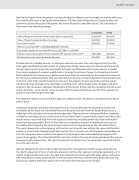
Net Family Property from the greater, and then dividing this difference by two to get one-half the difference. One-half the difference is the equalization payment. The Net Family Properties are in balance when this payment is paid by the spouse with greater Net Family Property to the other spouse. This calculation is illustrated in the following example.
HUSBAND
WIFE
Value of Property owned on Valuation date (date of separation)
$100,000
$60,000
Value of Property owned on date of marriage
$20,000
$30,000
Net Family Property
$80,000
$30,000
Difference between NFP's is $50,000 ($80,000–$30,000)
Equalization payment is one-half difference or $25,000 (1⁄2 x $50,000)
Subtract equalization payment from Husband’s NFP and add to Wife’s NFP
($25,000)
$25,000
Net Family Property after Equalization Payment
$55,000
$55,000
Persons who are intending to marry, or who have married, may enter into a marriage contract to settle their rights and obligations with respect to, among other things, “ownership in or division of property.” By the marriage contract, the parties may modify the rights and obligations in the Family Law Act or depart from them completely. A common modi cation is to adopt the division of property calculation in the Act. But to add to the list of exclusion; to add as an exclusion from the calculation for the equalization payment, for instance, a matrimonial home that was inherited by one party, a complete departure from the approach in the Act, at the other end of the spectrum, is to oust the property division calculation entirely, and to substitute division of property by ownership; no sharing at all - what belongs to him, he keeps, and what belongs to her, she keeps. In between modi cation of the factors that go into the calculation, and the ouster of the calculation - or no sharing - there are many different ways that parties can tailor their approach to property acquired during the marriage.
The important thing is to ensure that the approach addresses their individual circumstances and is fair to both of them.
A last word should be said about matrimonial home (or homes). We have mentioned the provisions in
the Family Law Act about the matrimonial home not being an exclusion from Net Family Property nor a deduction in the calculation of the equalization payment. These provisions can be modi ed or completely avoided by a marriage contract. Deductions and exclusions relate to ownership of property and the parties may do more or less what they wish with respect to ownership, including ownership of the matrimonial home barring one exception. Part II of the Family Law Act protects a spouse from being thrown out into
the cold by restricting what the owner spouse may do in terms of possession of the matrimonial home.
The owner spouse may not mortgage or sell his or her matrimonial home without the consent of the other spouse, or a court order dispensing with that consent. This is to make sure that the owner spouse does not evict the non-owner spouse without that spouse having the alternate accommodation arranged, or the means of arranging it. The notion behind this restriction is that in the case of matrimonial homes the spouses have equal rights of possession. The right to possession (as distinct from “to ownership”) cannot be limited by a marriage contract.
And any attempt to do so is unenforceable. On separation, the question of which spouse should give up the right to possession in favor of exclusive possession for the other spouse is settled by agreements, or in default of agreement by the court. The right of possession is personal against the other spouse and ceases when they divorce unless an agreement or order provides otherwise. In the event of death, the surviving spouse has a right of possession against the estate of the deceased spouse for 60 days.


